When we set out to build a workbench for the Cincinnati Museum’s Center’s exhibit on Henry Boyd, I figured that Megan and I would do most of the work. Yes, we had invited the public to help, but usually that involves them heckling us: “I bet that would be easier if you had a nail gun!”
But these were Lost Art Press readers.
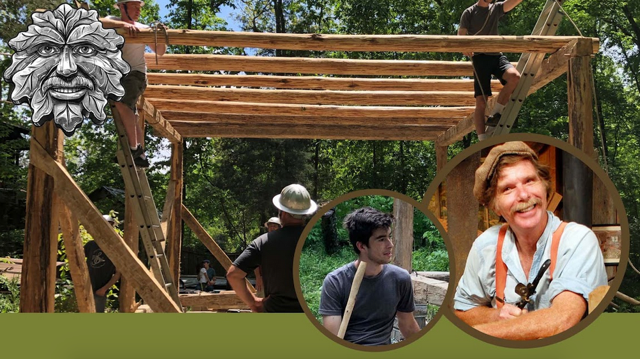
About 15 minutes after we unlocked the doors we had a small crowd in the bench room looking over the parts and my construction drawings. I glanced at Joe Grittani, one of our loyal local readers, and I asked if he’d saw the workbench’s aprons to shape. He took the panel saw from my hands and went to it.
I looked over at another pair of readers. “Would you plane up these legs?” They took my jack plane and went to it. Within a couple hours, we had entire teams of people sawing, planing, boring and nailing the parts of the workbench together. I had to put the brakes on the activity to make sure we didn’t finish it before lunch so that other people could help work on it.
For me, this felt like the first ray of sunshine since the beginning of the pandemic in 2020. Here we were, working as a community to build a workbench that would help educate others about one of the most important (and lesser known) black furniture makers in the Midwest.
During that morning, we talked about Boyd and the hardships he faced. And the historical stew of 19th century techniques, tools and materials we were using to make the bench so that it might have looked at home in Boyd’s workshop on Broadway Street in Cincinnati.
Sometime during that Saturday afternoon, we turned the bench onto its four legs, and I called the bench done (for now). I still have to clean up the joints and add a face vise and a planing stop. But the bench is solid and looks like how I envisioned it.
And the most surprising thing was how difficult it was to build: All I had to do was ask for help.
I owe a great many thanks to Dr Iwan Wyn Rees, senior lecturer and director of the Cardiff Centre for Welsh American Studies, located in the School of Welsh at Cardiff University, which serves to promote the study of the culture, language, literature and history of the Welsh in the Americas.
First, we hired Iwan to provide pronunciations for each of the Welsh words in “Cadi & the Cursed Oak,” and he used the International Phonetic Alphabet (IPA). It was perfect except we worried children may not understand it. But simplified pronunciation guides are tricky. There is a lot of room for interpretation and criticism, and one must be mindful of regional dialects as well. But Iwan, who has a young daughter, understood. And despite the rush of the holidays he created one for the book. Here’s the difference:
Yr Hen Ardd (The Old Garden)
IPA: ər heːn arð
simplified: uhrr hain arrthe
He also provided a wonderfully detailed pronunciation guide tailored to the book, which we, unfortunately didn’t have room for – but it’s included at the end of this post.
We then hired Iwan to record himself speaking each of the words. You will find those recordings below. Simply press play on the audio file underneath each word. If two audio files exist, you’ll be treated to a different pronunciation in the local dialect.
Enjoy!
— Kara Gebhart Uhl
Aran Fawddwy (AHRR-anne VOWTHE-ui): mountain peak in southern Snowdonia, North Wales
Aran Benllyn (AHRR-anne BEN-ttlin): mountain peak in southern Snowdonia, North Wales
ASGRE LÂN DIOGEL EI PHERCHEN (ASK-rreh larne DEEOGG-elle ee FAIRRchenne): a good conscience is the best shield
Cader Idris (CAH-derr ID-riss): a long mountain ridge in southern Snowdonia
Ceubren yr Ellyll (KAY-brren uhrr ETTLittl): the hollow oak of the demon
Coed y Brenin (koyd uh BRREN-in): a forest near Dolgellau, in Snowdonia National Park
Coed y Moch Lodge (koyd uh mawch): built in 1830 on the Nannau estate by Sir Robert Williams Vaughan, second Bart, who insisted dinner guests arrived on time. The lodge was a six-minute ride from Nannau, hence the clock permanently painted six minutes to five.
Coraniaid (korr-ANNE-yighed): magical and malevolent beings from Welsh mythology with an acute sense of hearing
cwtsh (kootch, as short as in ‘cook’): hug
cyfarwyddiaid (kuv-ahrr-OOWITH-yighed, with ‘th’ as in ‘the’): storytellers
Dolgellau (doll-GGETTL-aye): a small town in northwest Wales
geol (GGEH-aul): jail
goujons (GOOJ-onz, with ‘j’ as in the French ‘je’ or ‘Jean’): breaded chicken tenders
gormesoedd (ggorr-MESS-oythe): oppressions or plagues
Lle gwreiddio y Fesen, Llwydded y Dderwen (ttlair GGOORRAYTHE-yaw uh VACE-enn TTLUITHE-ed uh THEIRR-wenn): the oak tree may succeed where the acorn takes root
Nannau (NANN-aye): an estate near Dogellau, once home of the Nannau oak
Owain Glyndŵr (OWE-ine gglin-DOORR): (1354-1416), rebelled against English rule; considered the father of Welsh nationalism
The Tale of Lludd (ttleethe) …
… and Llefelys (ttleh-VELLE-is): …
… one of several Welsh prose tales from around the 11th century, found in the “Red Book of Hergest (HERR-guest)” …
… and in fragmentary form in the “White Book of Rhydderch (HRRUHTHE-errch),” …
… and translated and published by Lady Charlotte Guest in a series called “The Mabinogion (mab-in-OGG-yon),” published between 1838 and 1849
yr hen a ŵyr a’r ieuanc a dybia (uhrr hain ah ooirr ahrr YAY-ank ah DUB-jah): the old know and the young suspect
Yr Hen Ardd (uhrr hain arrthe): The Old Garden
Pronunciation guide
The following guidelines are not by any means comprehensive but relate rather to Welsh-language words which appear in the story.
Note that emphasis (or word stress) is placed on the penultimate syllable (i.e. the last but one) in all words consisting of more than one syllable, (bar Glyndŵr) e.g. CÁD-er (not cad-ÉR), BRÉN-in (not bren-ÍN) and Dol-GÉLL-au (not DÓL-gell-au or Dol-gell-ÁU).
Vowels
a – as in the English ‘man’ in all positions, e.g. ardd /arð/ ‘garden’ and Aran /ˈaran/, the first element in Aran Fawddwy and Aran Benllyn (two mountain peaks).
â – lengthened ‘a’ similar to the English vowel in ‘art’, e.g. glân /glaːn/ ‘clean’. A mutated form of glân is found in the proverb Asgre lân diogel ei pherchen.
e – as in the English ‘net’ or ‘edit’ often, e.g. Dolgellau /dɔlˈgɛɬaɨ/ and Cader /ˈkadɛr/.
ê / e – similar to the English vowel in ‘fair’ (but closer to the quality of ‘fay’ in most dialects, although never diphthongized to /ei/). It is always this long vowel that we find in hen /heːn/ old, e.g. Yr Hen Ardd.
i – as in the English vowel in ‘pin’, e.g. Idris /ˈidris/ and /ˈbrɛnin/. It is sometimes pronounced as a semi-consonant too, as in the initial sound of the English yes, e.g. ieuanc /ˈjeɨaŋk/ ‘young’ and gwreiddio /ˈgwreiðjo/ ‘to root’ / subjunctive form of ‘to root’.
o – as in the English ‘hot’ or ‘knock’ often, e.g. Dolgellau /dɔlˈgɛɬaɨ/ and gormesoedd /gɔrˈmɛsoɨð/ ‘oppressions’.
ô / o – similar to the English vowel in ‘law’ (but closer to the quality of ‘low’ in most dialects, although never diphthongized to /ou/). It is always this long vowel that we find in moch /moːχ/ ‘pigs’, e.g. Coed y Moch.
u – pronounced as ‘i’ as in the English ‘pin’ in south Wales but with the centralized vowel /ɨ/ in the north of the country. It appears in the text as a second element of diphthongs, e.g. ieuanc /ˈjeɨaŋk/ ‘young’ and /dɔlˈgɛɬaɨ/.
û / u – pronounced as ‘ee’ as in the English ‘tree’ in south Wales but with the centralized vowel /ɨː/ in the north of the country. It appears in the text in the personal name Lludd /ɬɨːð/.
w – as in the English vowel of ‘put’ in cwtsh /kʊt͡ʃ/ ‘hug’. It is sometimes pronounced as a semi-consonant too, as in the initial sound of the English well, e.g. dderwen /ˈðɛrwɛn/ (mutated form of derwen) ‘oak (tree)’ and gwreiddio /ˈgwreiðjo/ ‘to root’ / subjunctive form of ‘to root’.
ŵ / w – as in the English vowel of ‘zoo’. In this text, it is found in (Owain) Glyndŵr /glɨnˈduːr/ (personal name) as a simple long vowel and in the verb ŵyr /u:ɨr/ (mutated form of gŵyr) ‘know(s)’ as a first element of a diphthong.
y – pronounced as ‘i’ as in the English ‘pin’ in south Wales but with the centralized vowel /ɨ/ in north Wales in final (unstressed) syllables, e.g. Penllyn /ˈpɛnɬɨn/ (placename), Llefelys /ɬɛˈvɛlɨs/ (personal name) and ellyll /ˈɛɬɨɬ/ ‘demon’. This is also the case in monosyllables too usually; however, in some common monosyllabic function words, e.g. the articles y and yr ‘the’, it is pronounced as in the English ‘but’ (with the schwa vowel), e.g. y dderwen /ə ˈðɛrwɛn/ ‘the oak (tree)’ and yr ellyll /ər ˈɛɬɨɬ/ ‘the demon’. In non-final syllables of words with more than one syllable, we also find the schwa vowel in these contexts, e.g. dybia /ˈdəbja/ (mutated form of the verb tybia) ‘suspect’ and cyfarwyddiaid /kəvarˈuɨðjaid/ ‘storyteller’.
Diphthongs
ai – as in the English ‘light’ or ‘my’, e.g. Owain /ˈouain/ (personal name).
au – as in the English ‘light’ or ‘my’ (with the centralized vowel /ɨ/ rather than /i/ as the final element in north Wales), e.g. Dolgellau /dɔlˈgɛɬaɨ/.
aw – as in the English ‘now’ or ‘owl’, e.g. Aran Fawddwy /ˈvauðuɨ/ (mutated form of Mawddwy).
ei – similar to the English ‘way’ throughout Wales, e.g. gwreiddio /ˈgwreiðjo/ ‘to root’ / subjunctive form of ‘to root’.
eu – similar to the English ‘way’ (with the centralized vowel /ɨ/ rather than /i/ as the final element in north Wales), e.g. ceubren /ˈkeɨbrɛn/ ‘hollow oak’ and ieuanc /ˈjeɨaŋk/ ‘young’.
oe – as in the English ‘toy’ (with the centralized vowel /ɨ/ rather than /i/ as the final element in north Wales), e.g. coed /koːɨd/ ‘trees’ and gormesoedd /gɔrˈmɛsoɨð/ ‘oppressions’. Note that the first element is long in northern monosyllables, as opposed to /koid/, which varies with /koːd/, in south Wales for coed.
ow – as in the English ‘owe’, e.g. Owain /ˈouain/ (personal name).
wy – similar to the English ‘fluid’ (although both elements appear in the same syllable). In north Wales, it is the centralized vowel /ɨ/ rather than /i/ that we find as a final element, e.g. Aran Fawddwy /ˈvauðuɨ/ and cyfarwyddiaid /kəvarˈuɨðjaid/ ‘storytellers’.
Consonants
The following consonants are pronounced in the same way in both Welsh and English usually: b, d, h, l, m, n, p, ph, s, and t. The following list therefore draws attention to some of the differences between the two languages.
c – always hard as in ‘cat’, e.g. Cader /ˈkadɛr/ and cwtsh /kʊt͡ʃ/ ‘hug’.
ch – as in the Scottish ‘loch’, e.g. moch /moːχ/ ‘pigs’ in Coed y Moch.
dd – always pronounced as the first sound of the English ‘the’ and ‘then’, e.g. y dderwen /ə ˈðɛrwɛn/ ‘the oak (tree)’ and cyfarwydd /kəvˈaruɨð/ ‘storyteller’.
f – always corresponds to the English ‘v’ as in ‘van’, e.g. y fesen /ə ˈvesɛn/ ‘the acorn’
ff – always pronounced as the first sound of the English ‘farm’ or ‘free’. Unlike English, the sounds of f and ff are always kept separate in Welsh (see f above).
g – always hard as in ‘gate’, e.g. gormesoedd /gɔrˈmɛsoɨð/ ‘oppressions’ and Dolgellau /dɔlˈgɛɬaɨ/.
ll – a typologically rare sound which turns up in all varieties of Welsh. When native speakers pronounce ll /ɬ/ and l /l/, the lips and front of the tongue are generally in a similar position in both cases. However, to pronounce ll, learners are commonly advised to blow air around the sides of the tongue. The nearest sound in English is heard when ‘t’ is followed by ‘l’, e.g. ‘little’ or ‘kettle’, but even this rather strange sound is not identical to the Welsh ll. Examples of ll from the text include Llefelys /ɬɛˈvɛlɨs/ (personal name) and ellyll /ˈɛɬɨɬ/ ‘demon’.
r – native speakers of Welsh roll their rs regularly. This involves vibrating the tongue to produce a trill or a tap. This r sound is not silenced after a vowel (as is often the case in varieties of English in Wales), e.g. in ardd /arð/ ‘garden’.
th – always pronounced as the first sound of the English ‘thanks’ or ‘through’. Unlike English, the sounds of th and dd are always kept separate in Welsh (see dd above).
With our new Dovetail Template almost ready for prime time (I think it’ll be live in the store next week), I have dovetails on the brain. But who am I kidding – almost everything I build, and everything I teach, involves dovetails – so they’re always on my mind.
I always use dividers to lay out my dovetails – mostly so I have to think only once about the setup; then, I can just pick up my dividers and easily replicate the same layout on every corner of the same size. Above is a video on how I do it.
– Fitz
p.s. One thing I didn’t include in the video: For the half-pins on both edges of the board, I typically use a tiny pair of dividers; that way it’s easy to tell the two sets apart.
There’s a lot going on in the world these days and as such, scheduled programming can sometimes be preempted. There is a possibility of this happening so Monroe’s live broadcast, which was originally scheduled for tomorrow, is being rescheduled for Thursday, April 7, 9 a.m. to 10 a.m. Pacific (12 p.m. to 1 p.m. Eastern), on Johanna Wildoak’s “Wildoak Living” radio program on KZYX, Mendocino Public County Broadcasting. The broadcast will be live-streamed on the KZYX website here.
The program will also be archived in the KZYX jukebox for about two months. You can look for the program by date and time of broadcast here. It will also appear as a podcast on all major podcast platforms. Simply search for “KZYX.”
Below, a few journal entries from Dick Proenneke, beginning April 7, 43 years ago today.
— Kara Gebhart Uhl
April 7, 1979:
My arm and shoulder showing only a trace of soreness from the heavy gouge work so gave them another go at it by continuing with the burl bowl.
April 10, 1979:
I sanded more on my burl bowl. Nearly good enough and now if I had some Flecto wood finish I would see if it was worth the elbow grease that went into carving & sanding.
April 14, 1979:
From a poplar wood log I sawed, chopped and gouged out a holding device for holding spruce burls for hollowing. A wide notch with the end undercut to catch the lip of the burl and prevent it from tipping while I use the gouge.
April 20, 1979:
I wrote another letter and then after noon I would do a little sanding. I was surprised that it went so well. Maybe fifteen minutes work to finish the burl bowl that I then wrapped for mailing to the lady in Juneau who sent me the ceramic mug.
Register now for GreenWood Wrights’Fest in Pittsboro, N.C., April 22-24, 2022 – a weekend of green woodworking fun, camping and family friendly entertainment. Revel in greenwood camaraderie as you learn traditional hand-tool skills, carving spoons and bowls, timber framing, basket making, steam bending, post-and-rung stool making and much more. Roy Underhill and other talented green woodworkers from around the country will be leading hands-on workshops, lectures and free demonstrations.
In addition to 26 workshops, there will be special events including a marketplace, and music and dance. Weekend tickets include one workshop, demos, nature walks, free camping, music, dancing and special events. Additional tickets for workshops will be available once admission tickets have been purchased. Food will be available on site, and beer will be available – in the evening, after knives and axes have been stowed – by the Red Moose Brewing Company.
“What I wouldn’t give to be there! Shaving away at a Slöjd-infused spoon while listening to Master Underhill weave his yarns sounds like a dream vacation to this wandering mule. Please give him my best affection, cheer, and a moderate serving of the Devil’s Biscuits™.” — Nick Offerman