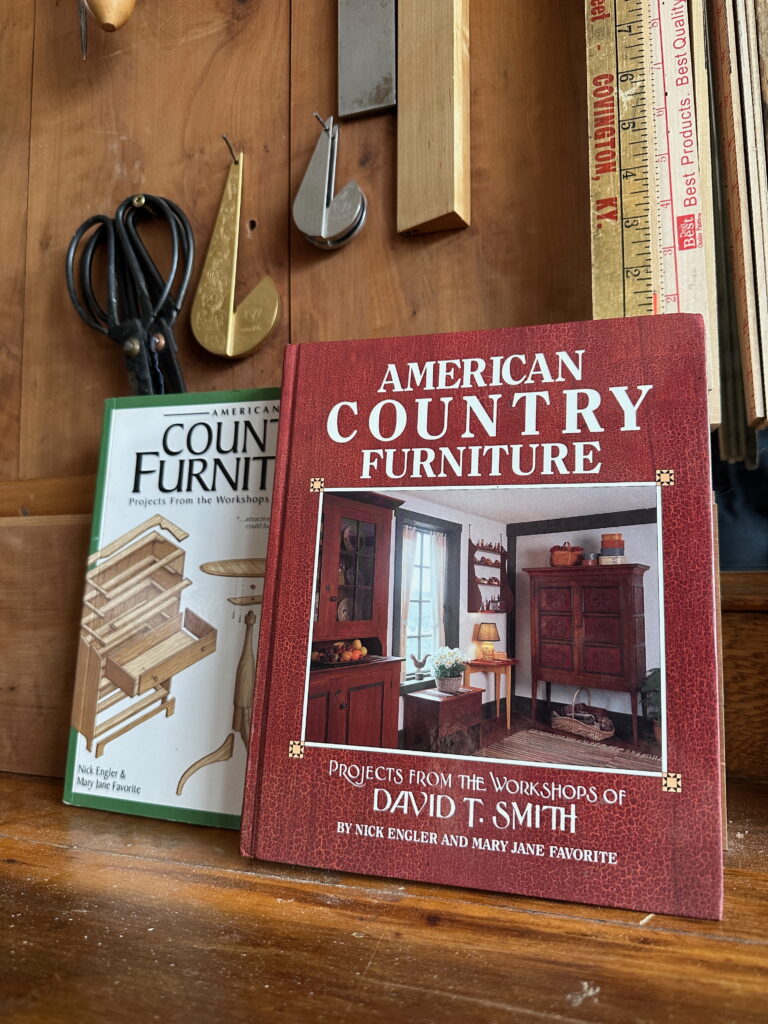
One of the most famous furniture makers and designers in the Midwest is someone you don’t hear much about in woodworking circles: David T. Smith. With this blog entry, I hope to change that – at least a little.
Smith is a long-time furniture maker in Morrow, Ohio, who specializes in early and vernacular American styles. Plus many woodworkers I know have worked for him during the last 40 years or been inspired by his designs.
My old boss at Popular Woodworking Magazine worked for The Workshops at David T. Smith, as did associate editor Jim Stuard and some of the other staffers who passed through the magazine. Troy Sexton, one of my favorite woodworkers, was a long-time subcontractor for Smith.
So during my 15 years on staff (1996-2011) I heard a couple hundred stories about Smith and his influence on the furniture market.
It’s hard for me to overstate how important this book was to amateur and professional furniture makers in this area during the 1990s. Everyone had this book. Everyone except me.
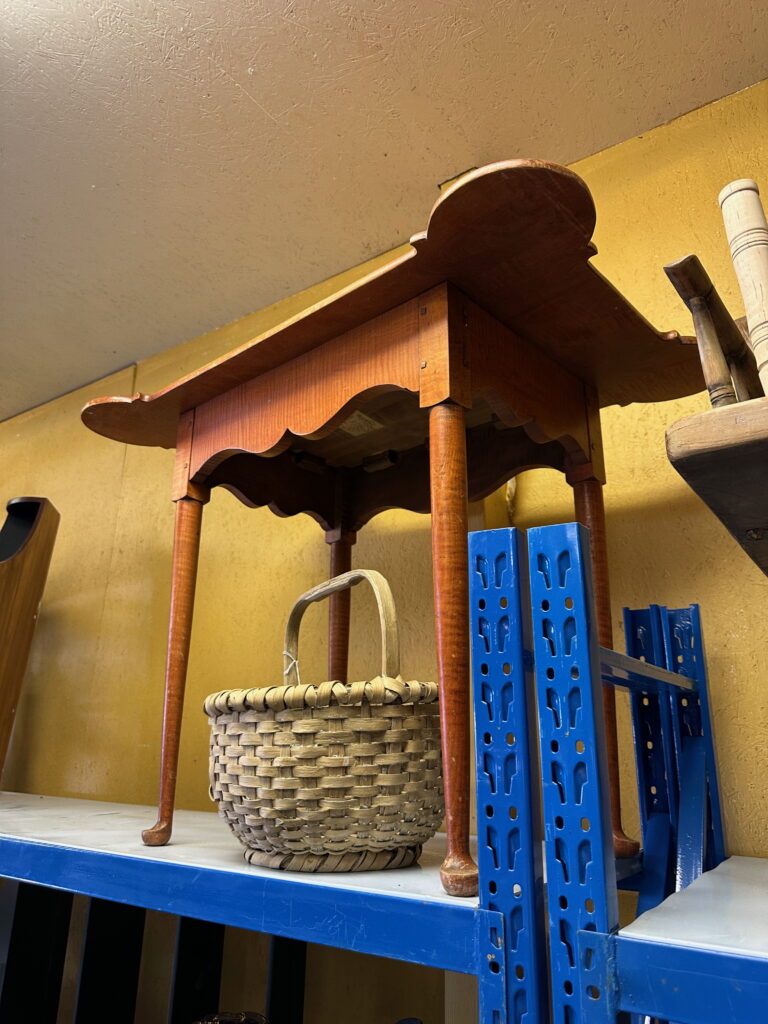
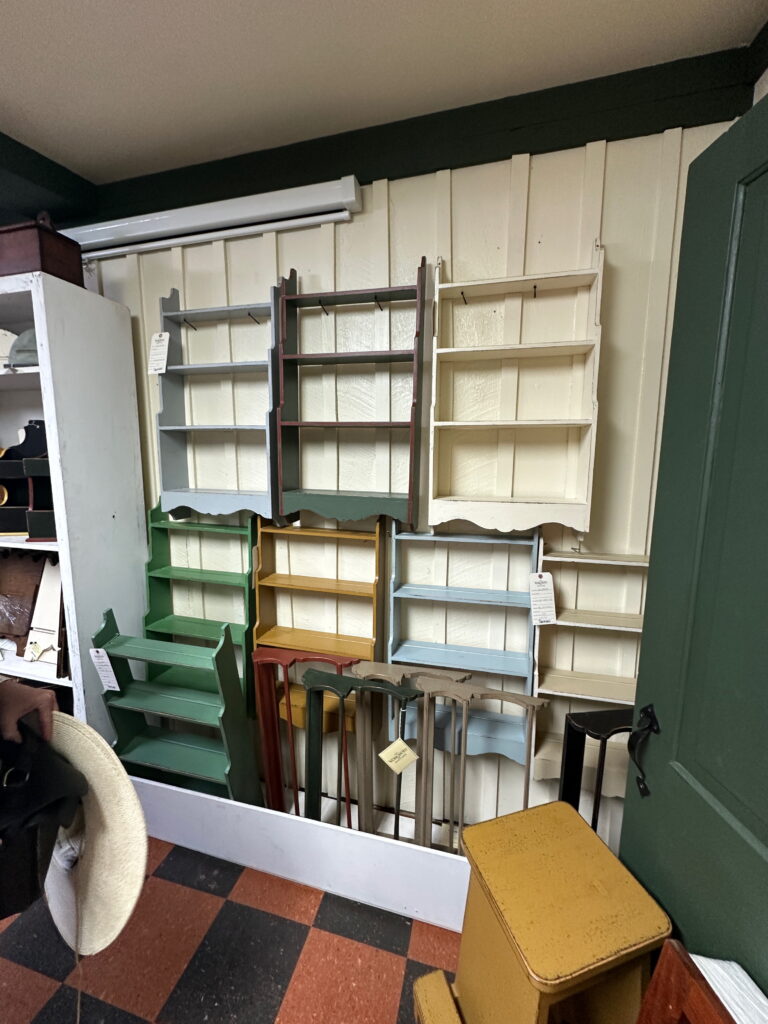
A porringer table at Smith’s. We basically copied it for the magazine.
So when Jim and Steve at Popular Woodworking decided to do a porringer table, I was astonished at how they came up with such a great design in short order. It turns out it was from Smith’s book (page 62 of the original edition).
I got wise. And I got my own copy of the book.
It is crammed with fantastic projects and techniques. Once I was shooting an article with Glen Huey and he built his divided-light doors in an astonishingly easy way.
“Wait,” I said. “We have to do an article on this technique you are showing me. It’s amazing.”
Glen quickly fessed up that it was from Smith’s book.
So get the book. Look past the 1990s-era printing and production values. The book was ghost-written by Nick Engler and Mary Jane Favorite at Bookworks Inc. in West Milton, Ohio. I worked with both of them for more than a decade (I was Nick’s editor). The information is fried gold.
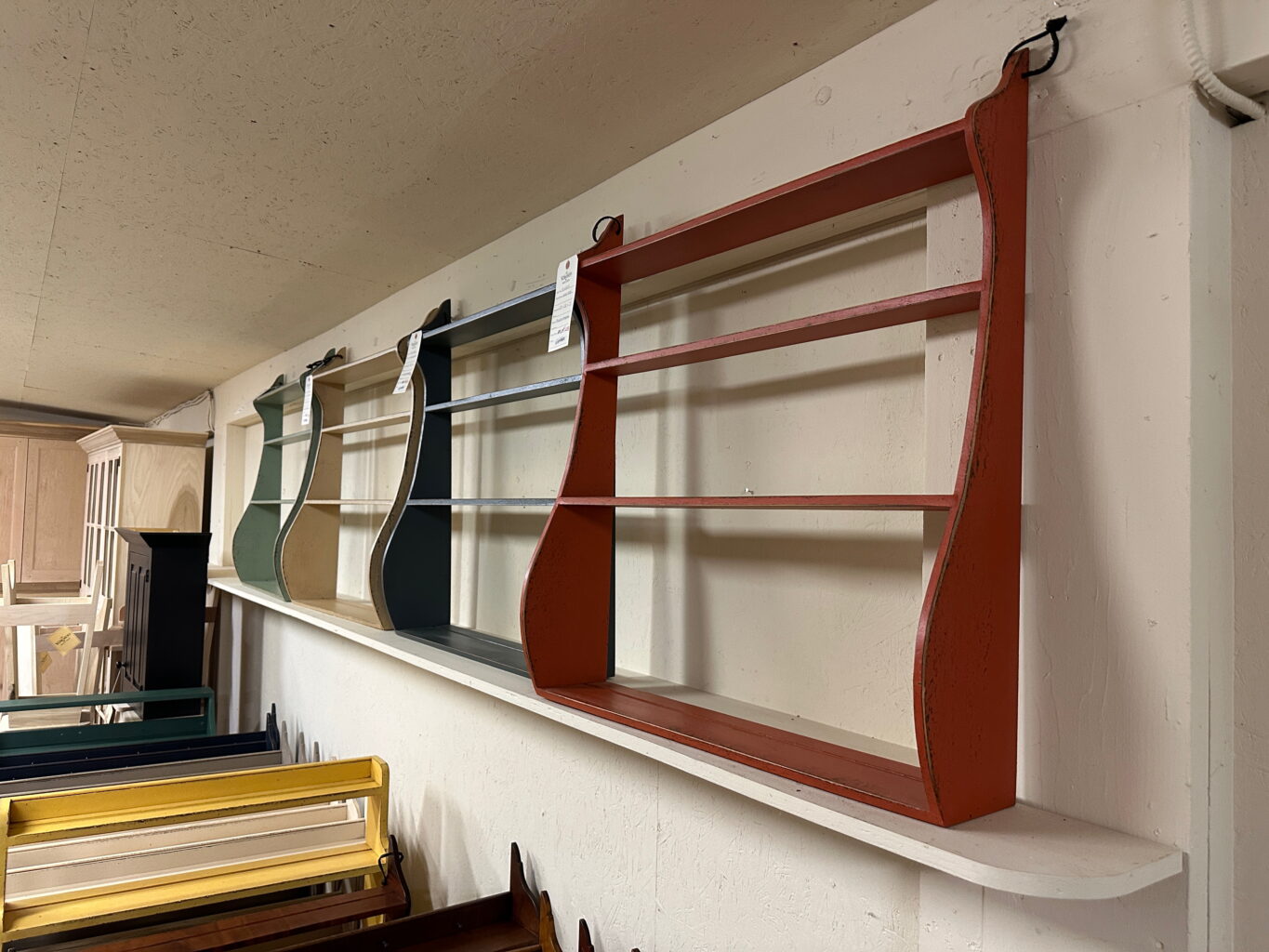
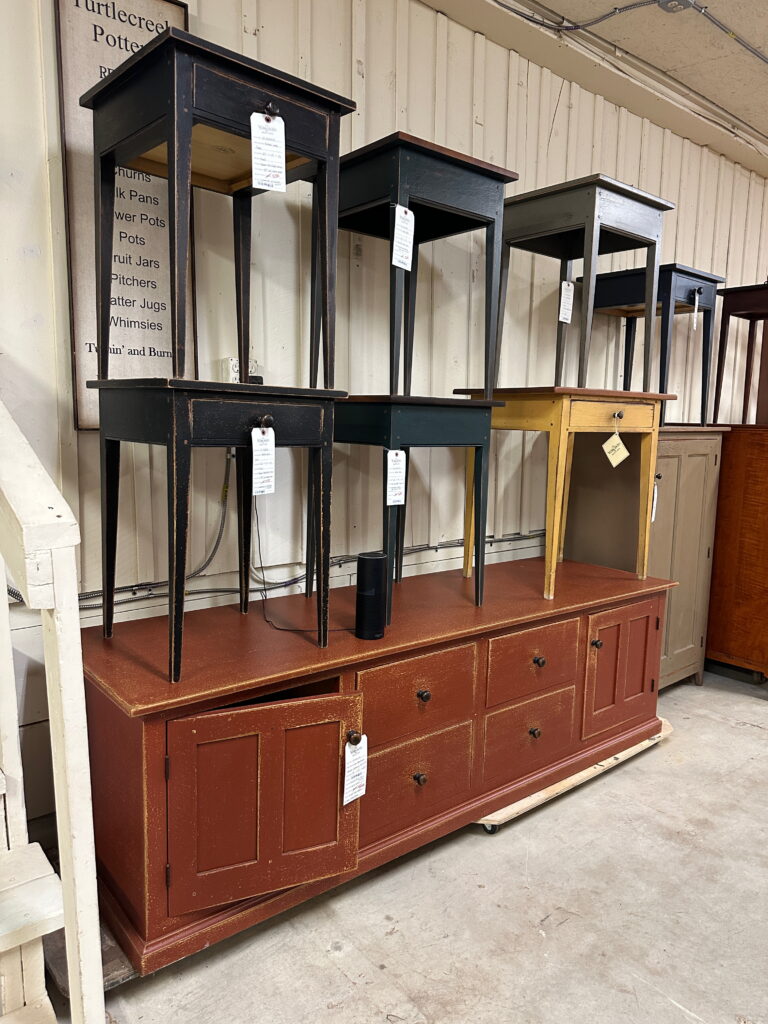
Over the weekend, Megan Fitzpatrick and I drove to the Workshops of David T. Smith to attend its annual Festival of American Crafts. It’s been going on for 45 years now and is when Smith opens up the shops to the public. There he has a redware pottery facility, a blacksmith shop, a farm store and – of course – the furniture and finishing operations.
Plus there were a bunch of vendors selling antiques and new furniture. Plus alpacas to pet. Food trucks. And a band to entertain visitors. Smith himself was there, too, talking it up with customers and chatting about kitchens and furniture.
As Megan and I left the festival on Saturday, it struck me that I rarely hear many people mention his name or his book. And as I paged through the book this morning, I also have to admit that this book was a huge influence on me and stoked my love for vernacular pieces. And the designs have aged well during the last 35 years.
So let the record show: David T. Smith is someone I think you should get to know.
Philippe Lafargue died at his home from an undiagnosed glioblastoma on June 22. Philippe has been instrumental in the Roubo project, helping with translations for “Make as Perfectly as Possible: Roubo on Marquetry” and “With All Precision Possible: Roubo on Furniture.”
“When we first met more than 35 years ago, I recognized immediately the talents Philippe possessed, talents that often surpassed his ability to communicate them,” says Don Williams, who co-authored the Roubo books along with Michele Pietryka-Pagán. “Over the years, thanks to the foundation of the multi-year curriculum of École Boulle and the career choices he made later on, combined with the thoughtful encouragement of his former wife, Maria, and the family life with his children, he became what Tom Wolfe would call ‘A man in full.’ In the end, his contribution of good-humored friendship and technical, historical and verbal expertise was integral to Team Roubo functioning smoothly for creating the volumes. We will proceed without him, although to be truthful, I cannot fully envision that right now.”
On learning of his death, Michelewrote, “I never actually met Philippe, but I could tell from one phone call that I was communicating with a true professional – not only a true master at what he did, but also a superb human being. We are all worse off with this loss of Philippe. May he rest in peace.”
We recently featured Philippe in a Meet the Author profile. It ended with this quote from Philippe:
“You can fight all the time but life is going to take you where it’s going to take you. It’s up for you to go for it, to be quick to accept and change. And you are always part of it. That’s the beauty of it. No matter what happened, you are part of it – 50 percent is your choice. The rest is to accept that you have decided to do this or not. That’s the difficult part. But life is short. Life is to be lived. Life is to discover yourself.”
The following is excerpted from “The Joiner and Cabinet Maker,” by Anonymous, Christopher Schwarz and Joel Moskowitz.
It begins in 1839. In that year, an English publisher issued a small book on woodworking that has – until now – escaped detection by scholars, historians and woodworkers.Titled “The Joiner and Cabinet Maker,” this short book was written by an anonymous tradesman and tells the fictional tale of Thomas, a lad of 13 or 14 who is apprenticed to a rural shop that builds everything from built-ins to more elaborate veneered casework. The book was written to guide young people who might be considering a life in the joinery or cabinetmaking trades, and every page is filled with surprises.
Unlike other woodworking books of the time, “The Joiner and Cabinet Maker” focuses on how apprentices can obtain the basic skills needed to work in a hand-tool shop. It begins with Thomas tending the fire to keep the hide glue warm, and it details how he learns stock preparation, many forms of joinery and casework construction. It ends with Thomas building a veneered mahogany chest of drawers that is French polished. However, this is not a book for children. It is a book for anyone exploring hand-tool woodworking.
Thanks to this book, we can stop guessing at how some operations were performed by hand and read first-hand how joints were cut and casework was assembled in one rural England shop.
Here’s what you’ll find in our expanded edition of this book:
• A historical snapshot of early 19th-century England. Moskowitz, a book collector and avid history buff, explains what England was like at the time this book was written, including the state of the labor force and woodworking technology. This dip into the historical record will expand your enjoyment of Thomas’s tale.
• The complete text of “The Joiner and Cabinet Maker,” unabridged and unaltered. We present every word of the 1839 original (plus a chapter on so-called “modern tools” added in a later edition), with footnotes from Moskowitz that will help you understand the significance of the story.
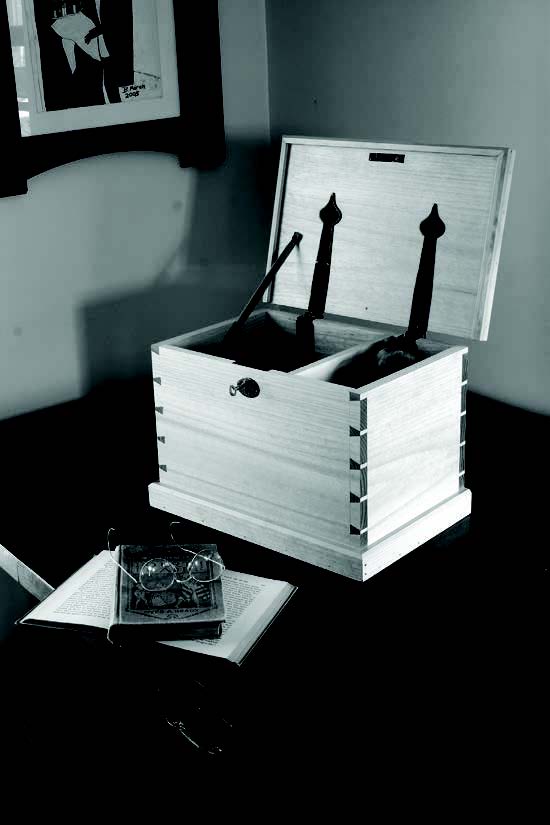
• Chapters on the construction of the three projects from “The Joiner and Cabinet Maker.” Schwarz built all three projects – a Packing Box, a dovetailed Schoolbox and a Chest of Drawers – using hand tools. The construction chapters in this new edition of “The Joiner and Cabinet Maker” show the operations in the book, explain details on construction and discuss the hand-tool methods that have arisen since this book was originally published.
• Complete construction drawings. Lost Art Press drafted all three projects in SketchUp to create detailed drawings and cutting lists for the modern woodworker.
Confession time: No one has ever taught me how to fit a lock. I have always done it by instinct, feeling along in the dark until the thing fit and worked (after a good deal of fussing).
So reading the directions in “The Joiner and Cabinet Maker” was a real revelation. As a result, fitting the lock for the Schoolbox was straightforward, fast and simple. That’s the good news. The bad news is that I don’t have anything to compare it to except my own self-taught ham-handed cave-carving methods. So you’re not going to get anything to compare Thomas’s methods to.
In any case, this method works great. Here we go. The key to everything with setting the lock is the pin that the key turns on. Yes, the keyhole is important, but not as important as the location of the pin. Let this square piece of brass guide you and you’ll be fine.
Bore a hole through the front of the box using a birdcage awl. The sharp arrises of the awl will bore through the front. Barring that, drill a hole that is smaller than the pin in the lockset and test the fit.
Find the centerline of the front of the Schoolbox and strike a vertical centerline near the top. The line need only be 1″ or 2″ long. Now you want to bore a scant hole through the front that the pin will push into (that’s why the pin is proud of the lock mechanism). You can measure this location, as Thomas did. Or you can line up the top of the lockset with the top of the carcase and push the pin into the soft pine. Then set the lockset aside and use a birdcage awl to bore a hole straight through the front of the box, where the pin should go. When you break through to the inside of the box, try to fit the pin into the hole in the front of the box. Widen the hole on both sides until the pine holds the pin right where it will be in the end.
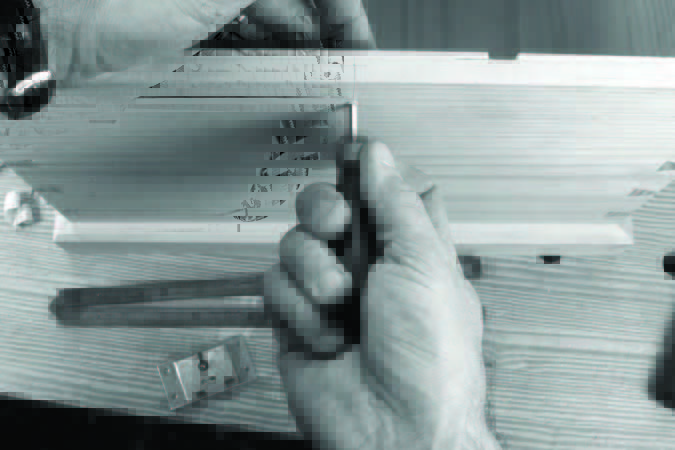
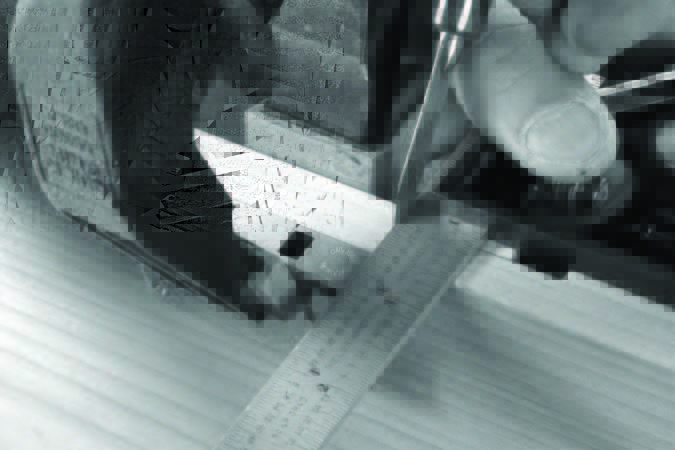
With the lockset in place, position your square up to the extents of the top plate and trace those lines on the top edge of your box.
Now mark where the top plate of the lockset will fit in the top edge of the Schoolbox. Working from the front of the box, press the pin into your hole. Clamp the lockset in place and trace the extents of the lockset onto the top edge of the Schoolbox. Use a square to help.
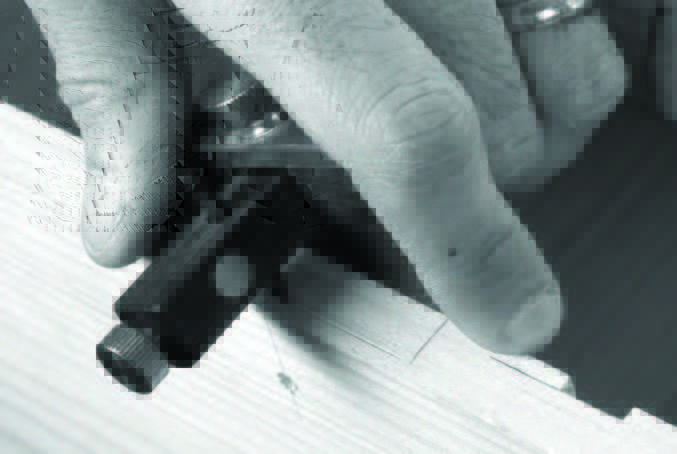
Here I’m using a cutting gauge to mark the front edge of the lockset on the top edge of the box. Then measure the thickness of this top plate and mark that on the inside of the box. Start wasting away this shallow mortise.
Now you want to mark out the width of the top of the lockset’s plate on the box. Set your marking or cutting gauge to the width of the plate and use the gauge to connect the distance between the two pencil lines you just struck. The mortise for the top plate of your lockset is now ready to be wasted away.
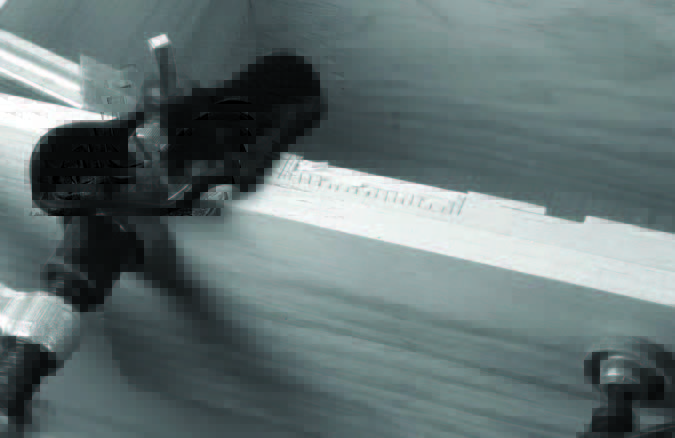
Router planes excel at this type of detail work. When you need mortises that are exactly the same depth (such as matching hinge mortises), a small router plane is the tool for the job.
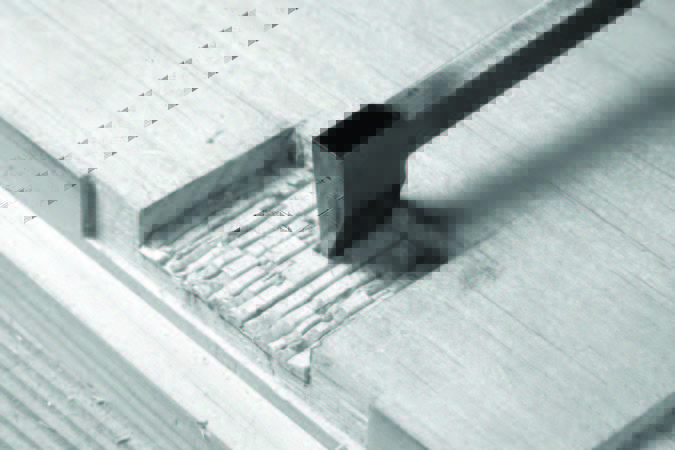
To remove this waste, score it with a chisel that you drive with taps of your mallet. You can then remove the waste with the chisel or use a router plane to ensure the depth of your mortise is consistent.
A drawer-lock chisel is great for this sort of close-quarters work. Score the waste with the drawer-lock chisel then remove the scored waste with a bench chisel by working from the top.
Now push the pin of the lock into the hole in the inside of the Schoolbox. The works of the lock will butt against the front piece. Trace around the box that holds the works. Measure the thickness of the lockset and mark this as the finished depth of your lock’s mortise. You can chisel out this recess, or you can saw its extents, then chisel it.
Use a fairly thick pencil lead to mark around the works of the lock. The corners of the lockset might be rounded over during manufacturing, and a thick pencil will actually give you a more accurate line than a skinny pencil lead.
The rest is easy. Press the lock into this mortise and trace around its back plate. Then waste away this area using the same techniques discussed above. If you measured carefully you should have a fullmortise lock that fits completely flush without thinning the front of the Schoolbox any more than necessary.
Use some small files to enlarge the hole for the key. Use a rattail file to enlarge the hole around the pin. Use a flat file to make room for the rest of the key. It doesn’t have to be perfect if you are going to cover the keyhole with an escutcheon plate.
Screw the lockset in place and fetch the steel hinges. They need to be installed in the case before the lid is affixed.
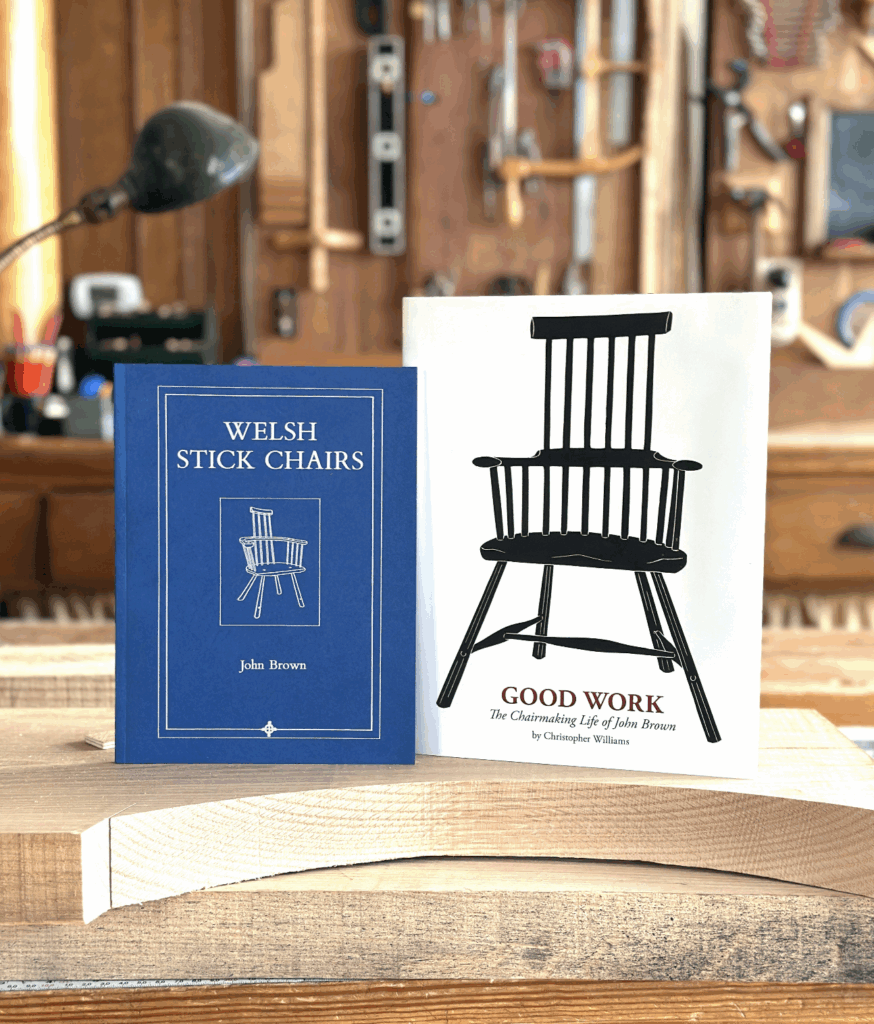
Get two classic chairmaking books – “Welsh Stick Chairs” and “Good Work” – for one special price. Together, they’re just $ 49 – but only through August 7. The regular price for both is $87 – you save 44 percent.
If you’re wondering where stick chairs came from, these two books will tell you the whole amazing story – and get you started in building them.
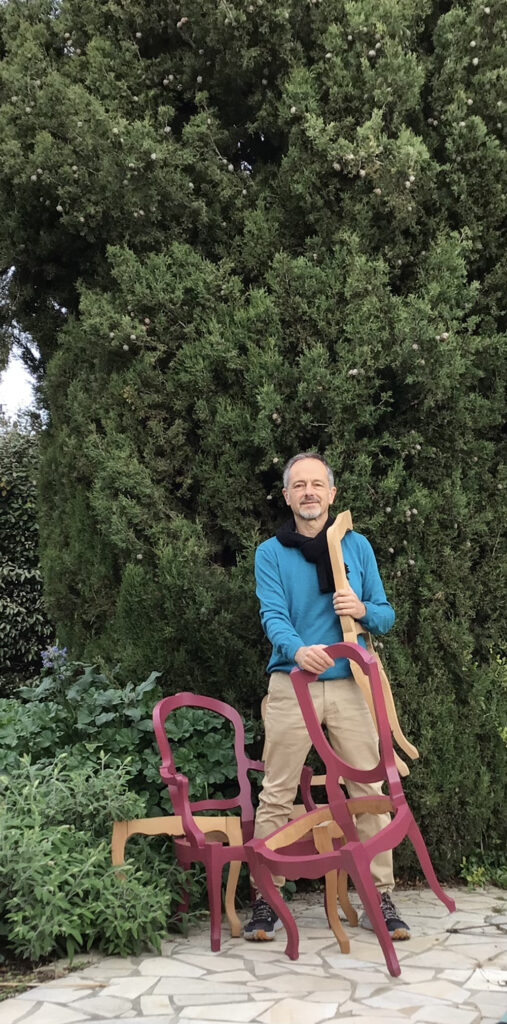
Stick chairs have been around for centuries – but they’ve mostly been ignored by museums. In the 1990s, Welshman John Brown wrote and published the landmark book “Welsh Stick Chairs.” This book inspired hundreds of people all over the world to begin researching and making these vernacular chairs.
One of those people who was inspired by “Welsh Stick Chairs” was Welshman Chris Williams. He worked with John Brown for more than a decade making these chairs. Through the years, John Brown’s chairs became more wild and true to the old Welsh character, and Chris was there the whole time.
After John Brown died, Chris wrote the book “Good Work” about his mentor. This biography explores John Brown’s creative genius and his tumultuous character. And it explains how John and Chris built these chairs almost entirely by hand.
There is no better place to learn about the spirit of these chairs and how they were made than with these two books. So we are offering them at a special price until August 7.
Technical Details
“Welsh Stick Chairs”: Using first-edition examples of “Welsh Stick Chairs,” we reset the entire book in the original font to ensure the text was crisp. We rescanned and processed the photos and drawings and cleaned them up. And we spent weeks researching the paper stock of the original to capture the same earthiness and perfection of the first edition. We also made a small but invisible improvement – we sewed the signatures together to ensure the book will last for lifetimes. The book is a softcover, covered in heavy card stock like the original. The book measures 7-1/4″ x 9-5/8″. Our version includes John Brown’s original introduction to the book, plus the additional introduction he wrote for the third edition and an updated essay on John Brown by Nick Gibbs.
“Good Work”: The 208-page full-color book is also filled with historical photographs (many never published before) and beautiful linocut illustrations by Molly Brown, one of JB’s daughters. The book is printed on heavy coated paper with a matte finish to make it easy to read. The book’s pages are sewn, glued and taped – then covered in heavy boards and cotton cloth – to create a book that will last for generations. And the whole package is wrapped in a durable tear-resistant laminated dust jacket, which features linocut illustrations by Molly Brown.
Both books are produced and printed in the United States.
One of our local treasures, the Baker Hunt Art and Cultural Center, hosts a free lecture series in its Scudder House ballroom, and the speaker on August 13 is Christopher Schwarz. His subject? Chairmaking, of course!
“Not long ago, most households in Kentucky had the basic tools and skills to build their own furniture. If you raised crops or animals, you needed a few tools to keep things working. Plus you had time during the winter to make a table or a few chairs.
“Today, a skill like chairmaking seems entirely too difficult to do without special training. Chairs have a lot of crazy angles and difficult joints. But we know that farmers and laborers made them all the time. How?
“For the last 22 years, furniture maker Christoper Schwarz has studied the furniture made by everyday people – what academics call “vernacular furniture – which is ignored by most museums. By studying older pieces and building new versions of them, Chris has found the clever ways in which farmers and other non-professionals did complex trigonometry and precise joinery using basic tools.
“In this presentation, Chris will show off a 300-year-old chair made by a farmer and the clues it offers as to how it was built. And then he’ll use those clues to assemble a basic chair on stage.”
The lecture is from 6-8 p.m.; a cash bar is available. While the event is free, seating is limited, so registration is required. The Center is located at 630 Greenup Street, Covington, Ky., 401011.