Please forward this to any budding author in your life.
It’s the last week of December, so our inbox is filling up with queries – people who want to write a book and would like us to publish it. We don’t accept unsolicited queries (it’s right here on our “About Us” page where it has been for years). But that doesn’t stop the mighty digital flow of “Dear Sir or Madams….”.
On the one hand, I’m happy that woodworkers still want to write and publish books. Heck, the fact that anyone thinks books should exist is encouraging.
But here’s the deal. If you are a first-time author, a query letter is like telling all your friends about your hot Canadian girlfriend from band camp last summer. There’s a huge chance that you are simply full of deluded crap.
I wrote my first novel, “Fish Eye,” in the 1990s. I got to the end, realized it was a piece of garbage and burned it. I would be embarrassed – even as a desiccated corpse – if it ever saw ink. I wrote my second book (on workbenches) starting in 2006. I wrote it, paid people to copy edit it, laid it out in InDesign and had it press-ready before I told anyone it existed.
It was accepted by F+W Media about 15 minutes after I submitted it (and is now published by Penguin/Random House). Book editors are stressed and over-worked. If you have an article, series or book that is both 1) compelling and 2) ready to go, then you are probably going to receive good news.
Note that I am not talking about fiction writing here. That world is one Inscrutable 8-Ball, and I have no good advice for you.
In the world of non-fiction and technical writing, however, queries are worse than garbage. They are promises of garbage. Mere whiffs of garbage.
And so I implore you: Just write your damn book. I mean COMPLETELY write it: photos, captions, bibliography, forward, afterword, colophon (it’s not about colons), table of contents and author bio. You don’t need me or some other publishing imprint to validate you.
Yes, this is a test. Most authors who decide to write a book will never finish it. I know this; you know this. By writing the book, you are ahead of about 90 percent of the potential authors out there who are pitching their next book idea to someone in the next bathroom stall.
And when you are rejected by every publisher?
Publish the book yourself. There are dozens of places that will print your book “on demand,” where you can order one copy or 40 (heck, the Cincinnati Public Library will even do it). We use Lulu for some in-house skunkworks projects. The quality gets better every year (though still nothing like a casebound, Smyth-sewn book). Give away digital versions of the book for free to people on the internet. Try to build an audience for your next book. Do that, and you will have a track record that other publishers might notice.
But if you do all that, then you might not care when publishers come calling. You might have started your own publishing imprint.
The following is Excerpted from “Honest Labour,” a collection of essays from The Woodworker magazine while the legendary Charles H. Hayward was editor (1936-1966). This book is be the fifth and final volume in our series from The Woodworker.
And here’s hoping that, if you want to, you get to enjoy a few hours alone in the workshop today.
— The finest of all tools, the human hand, is determined by the will, mind, character of the man who wields it.
It often surprises me to find how few people can bear to be alone. It is almost as though they regarded time as a vacuum to be filled rather than as something to be used or enjoyed for its own sake. A man will drift along to the local, the club, or the pictures “to pass away the time” rather than spend a few hours in his own company, and yet it is just those hours when one might be alone that can be turned to the most valuable account. But to bear to be alone one needs an interest—any deep, abiding interest will do. With Paolo Uccello, the Italian painter, it was the interest of perspective which he pursued in all its most intricate forms and which so held him enthralled that we are told: “When engaged upon those matters Paolo would remain alone, like a hermit, with hardly any intercourse for weeks or months, not allowing himself to be seen,” taking pleasure “in nothing except the investigation of difficult and impossible questions of perspective.” A passion for the solving of a problem, an impulse to achieve something is already halfway to creation, and it is in the doing of a creative job that we really lose ourselves to find ourselves, and are no longer the bored, indifferent passers of time, but are unconscious of time.
It would be too much to claim that the man who follows a craft like woodwork is never lonely, but it is certain that he will never know the worst kind of loneliness, the apathy of mind and body which is the negation of life. The very acquisition of skill enriches the personality, adding to a man’s resources, making him more independent, developing his judgment and giving him more confidence in his own powers. We never know our powers, indeed, until we begin to use them, and then it is a lifetime’s job to find out how far they will go. Skill develops with the use of skill and it is one of the few things that can be carried to perfection in a lifetime. For, as we learn from the study of the arts and crafts of the past ages, there is no progress in the capacity of the human hand. The knowledge of tools and machines increases as time goes on, but the finest of all tools, the human hand, is determined by the will, mind, character of the man who wields it and does not develop from one generation to another. Indeed, there are examples of arts and handicrafts centuries old that will stand up to any comparison with the best work of today.
It is a humbling but heartening thought. We are challenged by the past to stand or fall by our own merits. It is commonly recognised nowadays how much the mind is bound up with the skill of the hands. It is in the mind that a job is first seen, planned, willed, and, says Ruskin, the work “is noble or inferior, first, according to the tone of the minds which have produced it and in proportion to their knowledge, wit, love of truth and kindness; secondly, according to the degree of strength they have been able to give forth, but yet, however much we may find in it to be forgiven, always delightful so long as it is the work of good and ordinarily intelligent men.” For indeed it is for a man to choose how he will use his mind—“discovering always, illuminating always, gaining every hour in strength, yet bowed down every hour into deeper humility; sure of being right in its aim, sure of being irresistible in its progress; happy in what it has securely done, happier in what day by day it may securely hope; happiest at the close of life, when the right hand begins to forget its cunning, to remember that there was never a touch of the chisel or the pencil it wielded but has added to the knowledge and quickened the happiness of mankind.”
The letters from JB are neatly typed or beautifully handwritten.
Between 1995 and 2001, chairmaker John Brown and Drew Langsner carried on extensive correspondence about JB’s classes at Country Workshops. In addition to discussing flights and fees, the two men wrote a lot about how they viewed the craft and the world today.
During our research for “Good Work: The Chairmaking Life of John Brown,” Drew graciously sent copies of the letters to help author Chris Williams. I recently reread the letters during a long flight and copied down some of JB’s more eloquent pronouncements about his work. I have left the punctuation and spelling as JB wrote. Drew agreed to let me publish these excerpts here.
Thanks so much to Drew for preserving these letters and letting us share them with you.
— Christopher Schwarz
John Brown at the Country Workshops’ Chairmaker’s Colloquium
3 January, 1995 I am a Welshman, and I am influenced in the chairs I make or some of them, by old Welsh chairs. Irish chairs are as different as is possible, so are Scottish chairs. Brittany is Celtic. The people of Brittany, Cornwall and Wales speak a language which has little relation to the Irish or Scots Gaelic. Celtic (with a hard C) is difficult to define, but it is a fashionable ‘buzz’ word, as was ‘heritage’ a year or two back. I strongly recommend you do not use it, and I would forbid the word Celtic to be applied to my work, it is Welsh. Welsh.
…One thing is certain, the chair I had seen had no woodturnings. I have a total and complete antipathy towards woodturning. It seems to me a mindless occupation to stand, holding a chisel up to a piece of revolving wood, the epitome of monotony. Without doubt some of the more artistic turning is clever, but the finished product leaves me cold.
When I see competitions for woodturnings at shows, it seems to be the woodworking equivalent of the Eurovision Song Contest, – ‘nil points’. There, I’ve said it, now you know how I feel about woodturning.
…I am not really a craftsman, the standard of my woodwork is very poor, I feel an artist, I work like an artist, each new project starts with a clean canvas. I shall be very disappointed if at the end of the week’s work any two of the chairs made are the same, and, furthermore, the chair that I make with them will probably not be the best one. This is surely a chair workshop rather than a school. Correct me if I am wrong.
…I shall recommend, but there will be no rules. I understand there will no complete beginners. If we have 8 people I would expect 8 different chairs. I would start each day with a short talk on what we must achieve before sundown, energy and commitment from everyone will be more important than skill.
2 May, 1995 I’m getting nervous. 13 students! Will you have enough bench space? vices? etc, etc? I guess you have done all this before and seem very laid back about it. I have some horrors though, for it is important the way my chairs are built. If you look through my book, articles etc you can see the equipment I use. For instance I don’t know how I could operate without an engineer’s vice on top of a bench, three quarters of the process is based on this. A low flat, level board for boring the seat and levelling we can rig up. Since I have been involved with the Country Workshops project I have come to realise myself that the process is as important as the materials. For instance you mention tapered holes, even numbers of degrees – I wouldn’t know what a degree looked like. My methods work. I have no purist views, just that in 1979 when I built the first chair I had no books on how to do it, no example to look at, just a picture in my mind’s eye. I worked with the tools I then possessed and built my ‘think’. It all came together, miraculously, you have sat in the chair, I am sitting in it now – it worked. A few adjustments here and there, a few more suitable tools, and I’m still doing it the same way. Remember, I do use glue (yellow polyurethane, BISON or BALCOTAN, both made in Holland, but there must be American equivalents, PVA is not suitable)
17 November, 1995 Notice, also, that I ALWAYS give credit. Time & again I have said I am only an average woodworker. It is true. Most woodworkers are more expert than I am. But I do it differently, and this, in retrospect was the main problem with my course. I was in awe of you and didn’t do some things as I should. Next time I must do it my way. Welsh Stick Chairs was an anomaly, I was just in charge of cobbling together 12 chairs, no matter what. They could have been Mongolian Chairs. The Spirit of Wales was missing. …I abhor these people who keep their archive under their armpit, I tell anybody what they want to know. But this seems rather different. We live in an age of instant experts… And when I write I always have a respect for other workers. I cannot enhance what little skills I have by criticizing others. But I am truthful, and I want to be kind.
4 June, 1996 The solution is to start a new magazine, which is what I am doing in my spare time. At the moment I am making a dummy to see what it looks like. It will be of smaller format with a square binding, black and white. More a journal that a magazine. 6 issues a year with an annual subscription in the UK of £20. I am going to try and get American readers. It will be called ‘QUERCUS’. Will keep you informed as to progress. I would hope to have first issue JAN/FEB, 1997. The magazine will have a high content on hand tools and techniques, chairs, history and the ‘zen’ of woodworking. I shall look for people who have something new to say, or want to get something off their chest. It’s bound to be a success because the competition is so poor.
1 July, 1996 Without any doubt I broke new ground in woodworking writing – quite unintentionally. I covered all sorts of subjects, from smoking bacon to the breakdown of my marriage. Nick (Gibbs) told me that 50% of their correspondence mentioned my stuff. I’m not trying to blow myself up, but realistically about 70% of woodworking writing is boring, repetitious stuff.
John Brown saddling a seat at Country Workshops.
…Most of the woodworking press has a certain teethgritting fundamentalism which attracts readers with similar problems. I keep wanting to shout ‘woodwork is fun’, let’s have a smile. I hardly know any woodworker who reads any of the magazines. The true market is hardly scratched over here. Then we have this growing inbalance in our population of old people. Add to this that many are now retired at 55 – there is a vast market.
2 April, 1997 I think it is a very retrograde step to be on the internet, there can be no justification for this. I had a man from Paris phone me to tell me what I was doing this summer, even telling me of the seminar. I was very angry. Never mind, I shall continue swimming against the stream, I was born to do it. By joining this latest fashion you will attract the kind of people you don’t need – like the man from Paris.
30 April, 1997 We are gradually handing all our skills over to technology. I imagine the devil appearing and offering me a computer, free, in exchange for my soul, and my ability to write, and my typewriter etc. The router, the saxophone, and now the computer, these are inventions of the devil. I am happy in my stupidity.
I am keen to make better chairs this time. If I don’t make a chair, and if we don’t have twelve students it will be O.K. I will send seat pattern. This is to be a REAL Welsh chair, unmistakable. I will bring a completed one with me in parts as before. This time I will finish it as I do for home consumption. And I will leave it with you, gratis, on one condition. That is that you allow me to put an axe through the seat of the one I left last time. It was a disaster.
18 June, 1997 I want everybody, I mean everybody, to dispose of all their machines and work by hand. However incompetent I am, to me my woodwork is my life. I keep trying to get better.
10 March, 1998 I do not operate in a ‘teaching’ atmosphere. The finest craftsman of the past were never, never ‘taught.’ An apprentice had to learn, most of his life was spent sweeping the floor, fetching and carrying, and doing menial tasks. They watched, they learned, and in the course had many a ‘thick ear’ for their pains. Now it’s all formalised, regularised, and is death to design and imagination. The first instinct of modern woodworkers when they want to make something is to buy a set of plans. This should be made illegal, with death as the penalty. Modern artists are all imagination and no skill, modern craftsman all skill (machine) and no imagination. I am not a strict traditionalist, we do have modern products that are good, but there should be a better ability to recognise what is good, and what is rubbish.
JB sawing a detail on an armbow.
5 January, 1999 This rustic woodworking worries me a little. It’s O.K. to leave drawknifed surfaces, flats on the sticks and legs etc, but to go over sawn parts to make them LOOK rustic is akin to plastic beams, complete with worm holes, in some pubs! If a chair is ‘rustic‘, it should be so because it was made ‘rustic‘. My highly polished chairs are the real modern rustic. I make no effort to cover anything I have done. Most of the proportions are eyeballed, and the sticks and legs are not regular. We live in an age when subtlety is no longer acceptable. Unless an object strikes you between the eyes, the modern punter doesn‘t see it.
22 September, 1999 I fully appreciate that you work on a shoestring, but it annoys me that people take it for granted that craftsmen can‘t be properly paid. Of course, I am not unmindful of the honour of being asked, but I can‘t eat glory.
28 November, 1999 I am getting older, and being a loner can‘t think of having a helper, they wouldn‘t do it right. I refuse to use machines, whereas nearly everyone else does. I have been hungry many times since I started making Welsh chairs. I invented the name Welsh Stick Chairs, and this is what I make. They are not really rustic. I do not bother to smooth them too much. But they are polished. No one is more mystified than I that people will pay so much, but I won‘t knock it. I love my chairs, I hate selling them, some of me, some pain is in them. But they are not rustic. Rustic means poorly made, primitive.
12 June, 2000 My chairs are art, sculpture. Each chair is a new canvas, and they are simple of construction, but sophisticated of design. With my total lack of formal education it has taken a large part of my life to interpret in words the feelings I have. Right, my chairs are INSPIRED by old Welsh chairs. But the slight dished tapers, the shapes and forms, copied by many in the last twenty years, have come from my imagination. Many people have influenced me over the years since I have been making chairs. I looked to many methods, some conventional, some the idiosyncratic workings of others trying to do their own thing, but I used those processes which I felt comfortable with. I am still learning, becoming increasing less interested in processes than the finished article. I have never ceased to try and improve the honesty of my work. Rustic is insult to all the hours of study, all the attempts to grasp the mysteries, all the pain I have had in working my way towards the perfect chair, an object that really doesn‘t exist. It is a mystery, and in trying to solve all the ‘whys‘, I have become increasingly less interested in the ‘hows‘. The hows are the practical side, easy to solve. They are an exercise in engineering and economics. Enough, even if you don’t agree I think you will understand what I am trying to say.
2 February, 2001 Three or four years ago I used to write at least a page a day in my diary, now I don‘t even write it every day, and when I do it‘s just a few lines. I bore myself! Just at the moment I live in a tiny little single story house, central heating and plastic double glazed windows. No ventilation. Too small for a bath, there is a shower. It is warm (hot) and convenient, but the A40 main road passes about 10 feet from the door. I took the place temp(orarily) whilst I got medical stuff sorted and that was 15 months ago. The only prospect that excites me is thought of moving in amongst trees again.
I hope Louise’s garden is as beautiful and fruitful as ever. I remember it so well, I have some good photographs of it. Anyway it is my hope that you are all well. Thank you for phoning. I’ll write more often in future. When I am depressed I try not to contact my friends but to save them for better days.
If this were corporate America, I would have been fired either today or on the Tuesday after Christmas (let him have a nice holiday with his family before we can him).
Lost Art Press shrank about 6 percent in 2023 across the board – that’s sales, revenue, numbers of orders and visitors to our website. So far this year, we’ve shipped out 43,341 books, tools, posters and T-shirts directly to woodworkers (I don’t yet have the numbers for what we shipped to our wholesale customers). That’s about 6 percent down from last year.
In corporate media, shrinking is unacceptable. You have to grow top-line revenue every year and maintain your profit margin – or increase it. Sometimes the goal that was handed down was to grow by 5 or 10 percent during a year, without additional expenses.
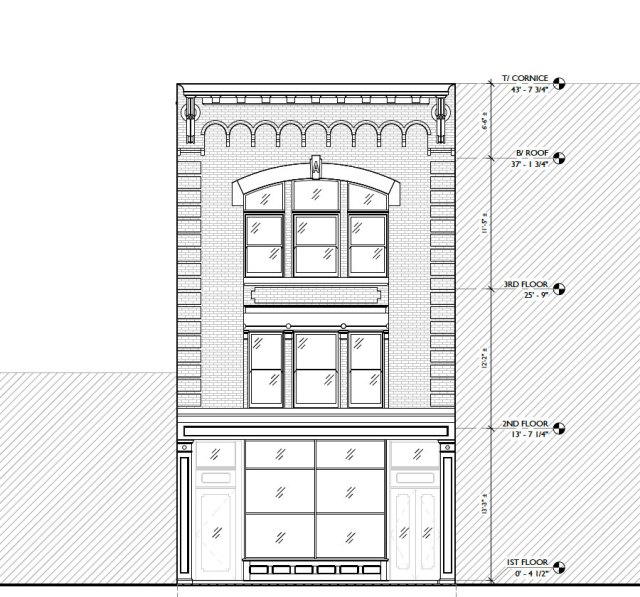
Why did we shrink? Because we grew in other ways. We bought a building so we could bring our fulfillment operations back in-house – where they belong. Megan, John and I stuffed a lot of boxes this year and attended a lot of construction-site meetings when we could have been making books or videos.
We also grew as an organization. We added two employees – Mark and Gabe – who run the fulfillment side of our operation. All our employees have company-sponsored health insurance (even though we aren’t required to offer it because of our company’s small size). And everyone started the job with vacation days in the bank.
How we judge success is – thankfully – different than in corporate media. Here’s how I evaluate our year:
Are we eating, paying our bills on time and enjoying what we do?
Do we have enough money in the bank so we can make good books, tools and the like?
What are customers complaining about? Are we getting more or fewer complaints than last year?
Are our authors happy with the royalties on their book(s)?
Do we have enough challenging projects ahead to keep life interesting?
Would I rather push a broom at Costco?
By these measures, Lost Art Press had a good year. To be sure, we had some flubs along the way. Both Megan and I failed to get our primary book projects to press. Both “The American Peasant” and “Dutch Tool Chests” were supposed to be out this year. Not to mention Vol. 2 of “The Stick Chair Journal.”
All three projects are entering the third trimester. We should begin pushing any time now.
So what’s ahead for next year?
We hope the Anthe building will be stabilized and fully operational by the end of January.
Matt Cianci’s book “Set & File” will be out in February.
“The American Peasant” will be out in March.
Other projects will follow: “Dutch Tool Chests,” “Stick Chair Journal,” a new book from Jim Tolpin and Geo. Walker, and full-length videos on building the Anarchist’s Workbench and my Hobbit-inspired stick chair.
I’ll start working on my next book (it’s a pocket book on finishing à la “Sharpen This”).
We also hope to release our claw hammer, plus a couple canvas accessories for your tool chest.
Will we be able to do all that? I hope so. But if we don’t, no one’s getting fired.
With family things happening here this weekend, the storefront doors will not be open until around 11:30 a.m., and we will close at 4 p.m. – just in case anyone is planning a visit for a last-minute woodworking gift (and you might instead consider a Lost Art Press gift certificate – no need to venture out!).
We will, however, still be answering your Open Wire questions throughout the day. So leave your question(s) in the comments below, and we’ll do our best to answer. Comments will close at around 5 p.m. Or possibly earlier (so don’t wait until the last minute)!
Also, Chris has a post scheduled for 3 p.m. that includes, among other things, what’s planned for 2024 – so all questions along the lines of, “When is X going to be published” will be referred to said post. And yes, that includes the Dutch tool chest book and Issue 2 of “The Stick Chair Journal.”